 Pavan Kale
A field, a flight test, and a season cut short
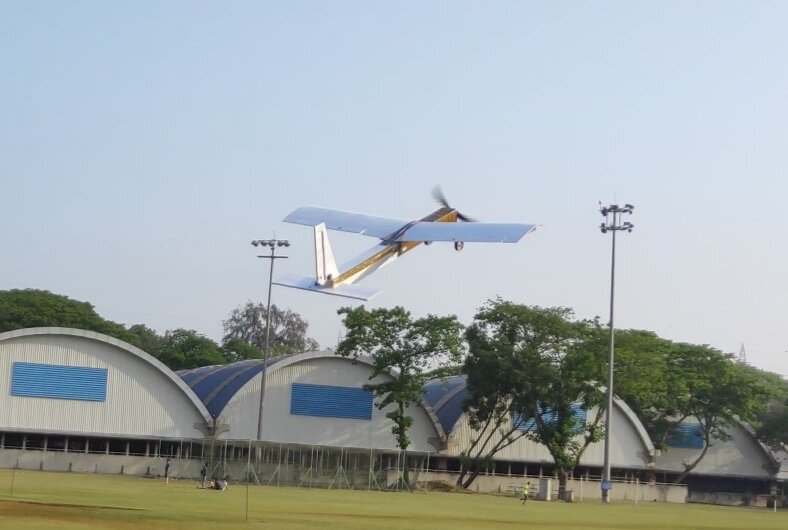
I worked on controls with Team AeRoVe, part of the Unmesh Mashruwala Innovation Cell at IIT Bombay. One of our student projects was the Barcelona Smart Drone Challenge. The event gave us a reason to build something that could work outdoors and to explain our choices through a series of design reviews.
What the trainer was for
We built and tested trainer aircraft alongside the larger competition work. These were a practical way to get experience without waiting for the final aircraft. An outdoor test made you account for things a simulation can keep conveniently fixed, from the way the airframe was assembled that morning to the conditions at the field. You learned to check what you could on the ground and to be explicit about what you were trying to learn when you went out.
The team completed the concept and preliminary design reviews. We were preparing for the flight-readiness review when the pandemic interrupted the event. It was disappointing, especially after the work that had gone into the aircraft. We continued with simulation because we could still work on many of the problems from home.
Working apart
During that same period, Yash Bhavsar and I took part in a remote BRICS skills challenge. The aircraft was in a different country, and we worked around the limits of what we could see and test from where we were. We received a Best of Nation award. I remember how much time we spent making sure we were talking about the same thing when a result appeared on a screen.
Both projects changed what I expect from a test. I appreciate a demonstration that looks good, and I also want enough of a record to understand what happened after the people who ran it have gone home.